Selling You Your Own Past: How Labels Turned Childhood Memories Into a Chart Strategy

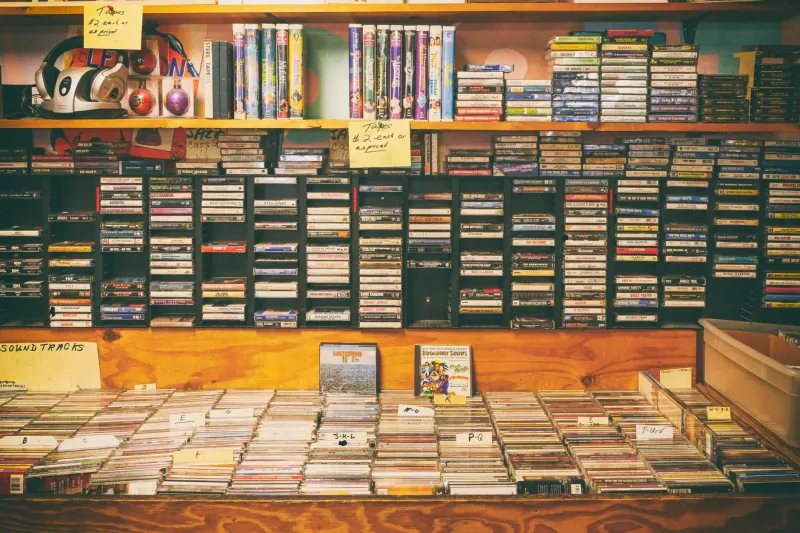
Photo by Photo by Travis Yewell on Unsplash on Unsplash
Somewhere in a studio right now, a producer is pulling up a drum machine preset from 1987 and layering it under a vocal recorded this morning. The label A&R sitting across from them isn't waxing poetic about Roland TR-808s or wishing they could go back to the Reagan era. They're looking at a spreadsheet. And that spreadsheet says nostalgia sells.
The music industry has always had a complicated relationship with the past. But what's happening right now feels different — more deliberate, more financially engineered, and frankly, more aggressive than any retro wave we've seen before. Labels aren't just signing artists who happen to sound vintage. They're building entire release strategies around the systematic excavation of '80s synth textures, '90s R&B production signatures, and even the estates of artists who died before TikTok existed. Welcome to the nostalgia industrial complex.
Follow the Money First
Before we get into the aesthetics, let's talk about why this is happening at all. Catalog revenue — the money generated by old music — has become one of the most reliable income streams in the modern label business. According to industry reporting, catalog sales now routinely outpace new music revenue for major labels. When Hipgnosis, Primary Wave, and a dozen other investment firms started paying nine-figure sums for song catalogs, they weren't buying art. They were buying annuities.
That financial logic has trickled down into how new music gets made. If old sounds generate reliable returns, why not engineer new songs that feel old? The risk profile is lower. The audience recognition is built in. And streaming platforms reward songs that people seek out repeatedly — which nostalgia, almost by definition, encourages.
Producers working inside major label systems describe a kind of invisible brief that's become standard. "You don't always get a mood board that literally says 'make it sound like 1993,'" one producer who asked not to be named told us. "But the references they play you in the room, the comps they keep bringing up — it's pretty clear what direction they want to go."
Gen Z Didn't Live It. Labels Are Selling It to Them Anyway.
Here's where the strategy gets genuinely interesting, and a little strange. The primary target audience for a lot of this retrofitted music is Gen Z — a generation born between the late '90s and early 2010s who have no firsthand memory of the eras being evoked. So what exactly are they nostalgic for?
Researchers who study generational media consumption have a term for it: secondhand nostalgia, or sometimes "nostalgia by proxy." Gen Z grew up watching their parents' VHS collections, scrolling through aesthetic Tumblr accounts full of '90s imagery, and binge-watching shows like Stranger Things that turned '80s iconography into prestige television. They didn't experience those decades — they inherited a curated, romanticized version of them.
Labels figured this out fast. The emotional hook isn't memory — it's vibe. A synth arpeggio that sounds like the opening of an '80s movie doesn't need to remind a 21-year-old of anything specific. It just needs to feel warm, cinematic, and a little melancholy in a way that cuts through the algorithmic noise of a Spotify playlist.
Some artists have threaded this needle brilliantly on their own terms. The Weeknd's Blinding Lights era, Dua Lipa's Future Nostalgia album, and more recently a wave of bedroom pop producers channeling late '90s Y2K aesthetics have all connected with audiences in ways that felt organic. But those successes have spawned a thousand imitators operating on pure calculation rather than genuine creative affinity.
The Estate Business Is Booming
One of the more eyebrow-raising corners of this trend involves artists who can no longer speak for themselves. The estates of deceased musicians — from '80s pop icons to '90s hip-hop legends — have become valuable IP assets that labels and management companies are actively developing. We're talking hologram tours, posthumous album releases assembled from vault recordings, and sample clearances granted at scale to producers chasing a specific sonic era.
The ethical questions here are real and largely unresolved. When an estate licenses a deceased artist's voice or likeness to be woven into a new commercial release, who is that serving? The legacy of the artist? The fans? Or the quarterly earnings call?
"There's a version of this that's beautiful — preserving music that might otherwise be lost, introducing artists to new generations," says one entertainment attorney who works with estate clients. "And there's a version that's just strip-mining a dead person's catalog because the numbers work. The line between those two things is blurrier than people want to admit."
Pastiche vs. Revival: Producers Know the Difference
Not everyone in the production world is comfortable with how this trend has evolved. There's a meaningful distinction, working producers will tell you, between a genuine stylistic revival — where an artist or producer has a deep, personal connection to a sonic era and brings something new to it — and pure pastiche, where the aesthetic is applied like a coat of paint with no underlying artistic intent.
"Pastiche is a costume," says one Grammy-nominated producer who has worked with both major and independent acts. "Revival is a conversation with history. You can hear the difference if you know what to listen for. The question is whether audiences care about that difference, and right now, I'm not sure they do."
Streaming data suggests that audiences respond to surface texture more than they might admit. Songs that hit familiar emotional registers — that warm analog warmth, that specific reverb tail, that drum pattern that sounds like something from a movie you saw as a kid — get added to playlists and re-listened to at higher rates, regardless of whether there's any genuine artistic substance behind the aesthetic.
Can Manufactured Nostalgia Feel Real?
This is the central tension the industry hasn't really resolved. Nostalgia works because it's tied to genuine emotion — the specific, irreproducible feeling of a memory. When you manufacture the aesthetic of nostalgia without the underlying experience, you're essentially selling a simulacrum. A copy of a feeling that most of your audience never had in the first place.
And yet — it keeps charting. It keeps streaming. The numbers don't lie, even when the emotional architecture underneath them is a little hollow.
Maybe that's okay. Pop music has never been purely about authenticity. It's always been partly about craft, partly about timing, and partly about giving people something that feels good in the moment without necessarily holding up to deep scrutiny. The '80s themselves were full of calculated, studio-engineered pop that later got mythologized as some golden era of authentic expression.
But there's something worth paying attention to when the entire machinery of an industry — the label infrastructure, the estate lawyers, the playlist algorithms, the A&R spreadsheets — all points in the same direction at once. That's not a trend. That's a system. And systems have a way of crowding out everything else.
The next time a song makes you feel like you remember something you can't quite place, it might be worth asking who built that feeling — and why.