Cashing In on Your Childhood: How the Music Industry Turned Nostalgia Into Its Most Reliable Revenue Stream
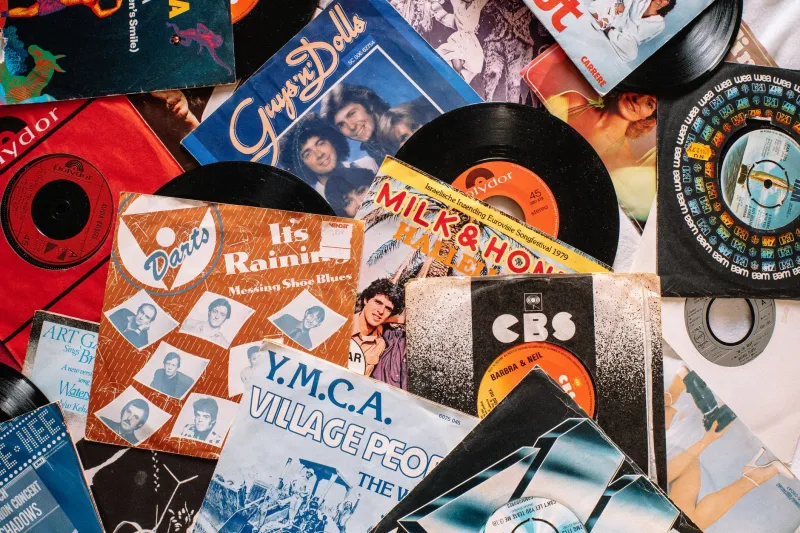
There's a moment every millennial knows. You're scrolling through a streaming playlist, half-paying attention, and then that song comes on — the one from the summer you were 14, the one that soundtracked a road trip or a first heartbreak or just a Tuesday afternoon when nothing mattered. For a few seconds, you're completely somewhere else. Labels know exactly what that feeling is worth. And right now, they're betting everything on it.
Nostalgia has always been a force in pop culture. But what's happening in the music industry right now isn't just a casual nod to the past — it's a fully engineered, data-backed, algorithmically amplified industrial operation. Record labels, major streaming platforms, and catalog investment firms have collectively decided that your memories are a more reliable product than anything a new artist could release next Friday.
The Catalog Gold Rush Is Real — And It's Accelerating
The numbers tell a blunt story. Catalog music — broadly defined as recordings more than 18 months old — now accounts for over 70% of all music consumption in the United States, according to industry data from MRC. That figure has climbed steadily for years, and the pandemic gave it a significant boost when people retreated into comfort listening.
Major labels responded by pouring resources into catalog acquisitions. Sony, Universal, and Warner have collectively spent billions buying up the rights to back catalogs from artists spanning the '70s through the early 2000s. It's not just legacy superstars either. Mid-tier acts from the '80s and '90s — the ones who had a handful of hits and then faded from the mainstream — are suddenly valuable commodities again because their music maps perfectly onto the emotional sweet spots of adults who now have real disposable income.
When a 42-year-old with a good salary hears a song they loved at 16, they don't just stream it — they buy the vinyl reissue, they buy the concert ticket, they buy the branded merch hoodie. Labels have done the math. Nostalgia converts.
AI Isn't Just Making New Music — It's Rebuilding Old Careers
Here's where things get genuinely interesting, and a little unsettling. The nostalgia machine isn't just about reissues and greatest hits compilations anymore. Artificial intelligence has entered the picture in ways that would've sounded like science fiction a decade ago.
Labels are now using AI tools to analyze streaming behavior and social media sentiment to identify which forgotten artists are sitting on untapped emotional equity. Think of it as a heat map of collective memory — algorithms scanning millions of data points to figure out exactly which '90s R&B act or which forgotten new wave band still triggers a dopamine response in a specific demographic. Once identified, those artists get the full revival treatment: remastered catalog drops, curated Spotify editorial pitches, targeted social media campaigns built around anniversary milestones.
Some companies are going further, using AI to generate promotional content — think short-form video clips, personalized playlist placement, even synthetic "throwback" narratives — designed to reintroduce an artist to audiences who half-remember them and introduce them to younger listeners through an engineered sense of discovery. It's nostalgia marketing that doesn't even require the artist to do much of anything.
The Reunion Tour Economy
Live music is where the nostalgia industrial complex really flexes. The concert business has increasingly become a reunion tour economy, with '80s and '90s acts commanding ticket prices that their original chart runs never could have justified. New Kids on the Block, Backstreet Boys, and TLC have all run successful touring operations in recent years — not as nostalgia novelties, but as genuine arena-level draws.
And it's working up and down the scale. Not just the mega-acts, either. Regional promoters and festival bookers have figured out that a lineup stacked with acts that peaked between 1988 and 2002 will reliably sell out to the 35-to-55 crowd in a way that a bill of current artists simply won't. The nostalgia ticket is a known quantity. It feels safe.
For the artists themselves, the economics can be complicated. Some are genuinely thrilled to reconnect with their audience and find that the music still resonates. Others are navigating complicated label deals that mean they see only a fraction of the revenue their revived catalog generates. The machine profits handsomely regardless.
What Happens to New Artists in All of This?
This is the question the industry doesn't love talking about. If labels are increasingly allocating marketing spend, editorial playlist pitching, and promotional infrastructure to catalog acts, that's resources not going toward developing new talent. The math isn't complicated.
Breaking a new artist is expensive, risky, and increasingly unpredictable. Resurrecting a catalog act with proven emotional resonance is comparatively low-risk. So the incentive structure is pulling the industry in one direction while new artists are left to fight over shrinking slices of attention on TikTok and YouTube.
Some argue that streaming's sheer scale means there's room for everyone — that catalog dominance doesn't actually crowd out new music, it just coexists with it. But ask an emerging artist trying to get editorial playlist placement what it feels like to compete against a remastered Fleetwood Mac album getting a major label push, and you'll get a more complicated answer.
Gen Z, for their part, has developed its own relationship with older music through TikTok virality — but that's a largely organic process, driven by individual creators rather than label strategy. The nostalgia industrial complex is something different: top-down, calculated, and optimized.
Is This Sustainable, or Are We Eating the Seed Corn?
The sustainability question looms large. Nostalgia, by definition, is a finite resource. The emotional power of a song from your formative years is real, but it doesn't compound indefinitely. At some point, the well runs dry — or the generation carrying those memories ages out of the peak spending demographic.
More immediately, there's a cultural cost to consider. An industry that prioritizes the past over the present isn't just making a financial calculation — it's making a statement about what music is for. If the dominant commercial logic says that the most valuable songs are ones that already exist, what does that do to the culture's appetite for discovering what comes next?
Labels aren't oblivious to this tension. Most major label executives will tell you they're committed to developing new artists alongside their catalog operations. And there are genuine success stories of new talent breaking through even in this environment. But the structural incentives are what they are.
Your childhood was always going to be valuable to someone. The question is whether the industry's relentless effort to monetize it is giving you something real in return — or just selling you the same feeling, repackaged, on an infinite loop.